Showing posts with label Jesus Christ. Show all posts

Saturday, August 20, 2011

The Greatest Man Ever Live

In chemistry, He turned water to wine.

In biology, He was born without the normal conception;

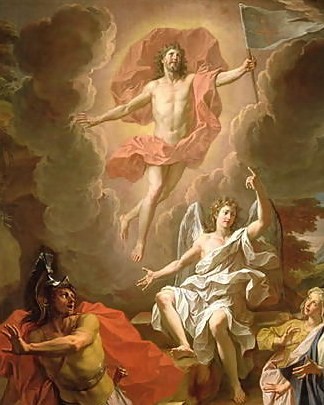
In physics, He disproved the law of gravity when He ascended into heaven;

In economics, He disproved the law of diminishing return by feeding 5000 men with two fishes & 5 loaves of bread;

In medicine, He cured the sick and the blind without administering a single dose of drugs,

In history, he is the beginning and the end;

In government, He said that He shall be called Wonderful Counselor, Prince of Peace

In religion, He said no one comes to the Father except through Him;

So, who is He? He is Jesus!

The greatest man in history


Jesus had no servants, yet they called Him master.

Had no degree, yet they called Him teacher.

Had no medicines, yet they called Him healer

He had no army, yet kings feared Him.

He won no military battles, yet He conquered the world.


He committed no crime, yet they crucified Him.


He was buried in a tomb, yet He lives today.

Friday, January 21, 2011

The Kingdom of God

The Kingdom of God, as taught by Jesus, is heralded by the early parables (Mark 2:21-22) that He used that seems to imply a “change of guard” – the Abrahamic covenant has now become the old religious order, and the kingdom of God has now arrived as a new covenant.

It seems that the phrase “Kingdom of God” and “Kingdom of Heaven” are used interchangeably. Specifically, the phrase “kingdom of God” occurs 68 times in ten different New Testament books, whereas “kingdom of heaven” occurs 32 times, and interestingly only in the Gospel of Matthew. One theory claims that the reason Matthew, being a Jew himself, used the phrase “Kingdom of Heaven” extensively is because Matthew’s writing is specifically targeted for Jewish readers, with the focus to show that Jesus Christ is the fulfillment of the many Old Testament’s prophecies. Devout Jews avoided using the name YHWH, and rather substituted with an appropriate phrase to depict deity. Hence, Matthew often replaced “Kingdom of God” with “Kingdom of Heaven”, whereas Mark and Luke, with their focus on Greek readership, used the phrase “Kingdom of God”.

Although, a kingdom brings the connotation of having a king, which is Jesus Himself, unfortunately the Jewish’s concept of the “kingdom of God” is very much a physical kingdom - a militant concept, where they expected Jesus to stomp against the Roman empire and establish Israel as an everlasting nation. This is further supported that the Jewish people had been living under foreign forces as early as around 750 BC since the Assyrian invasion. Furthermore, it has been more than four hundred years’ lapse since the last Old Testament, Malachi, had spoken before Jesus came. The Jews had been dejected, possibly even doubted whether God would rescue them from further foreign invasion.

Jesus on the other hand, indicated that the kingdom of God that has come is not a physical one (Luke 17:20-21, John 18:36), but a spiritual kingdom. The entrance into the kingdom of God is heralded by a new birth (John 3:5) with a need for heart repentance (Matthew 3:2). Romans 14:17 further strengthen the fact that the kingdom of God that Jesus initiated is not about the external but rather the internal.

Saturday, January 8, 2011

The Temptation of Christ


The Temptations of Christ

This account follows immediately[1] after His Baptism. Whereas in the baptism account, the divine voice says “You are my Son, whom I love; with you I am well pleased." (Luk 3:22 NIV), during the three temptations, the Son of God was tempted twice with the phrase “If you are the Son of God….” in attempts to make Him doubt His Messiahship or identity. The word “tempt” in Luke 4:2 is translated from the Greek word peirazō, which also means “to test”, although no explanation was given in the accounts as to why the testing was necessary. But what is clear is that He was driven by the Holy Spirit into the wilderness.

The significance of these three temptations

  1. "If you are the Son of God, tell this stone to become bread." (Luk 4:3 NIV)

In the first temptation the devil suggests Jesus will die if He does not eat[2]. This temptation was not a temptation to immorality or sin in the traditional sense as there was nothing sinful in eating. Rather, it was a testing as to kind of Messiah that He would be. In other words, it was a testing whether Jesus would use His power and His privileges as the Son of God for selfish gains. Therefore, this was a test as to whether Jesus would trust His Father to provide for His basic needs or whether He would usurp the sovereignty of God the Father for His life.

  1. "I will give you all their authority and splendor…if you worship me (Luk 4:6 NIV)

In this temptation, the devil promised Jesus success through a “cross-less” solution. He could have the world and rule it. With the kingdoms of the world given Him, he could meet the basic needs of the world - rid the world of hunger, war, injustice, poverty, etc. All He need do was worship the devil and His mission. The end justifies the means.

  1. "If you are the Son of God," he said, "throw yourself down from here” (Luk 4:9 NIV)

The exact intention of this temptation is debatable. Some have suggested that it was a temptation to perform something spectacular. However, the problem with this view is that no one is mentioned as being present other than Jesus and Satan. The most likely interpretation of this temptation is that it involves a dare on Jesus’ part to make God rescue Him. Jesus recognized the fine line between trusting God for the needs of life and challenging him to rescue him from artificially created difficulties[3].


[1] Mark connects the baptism account with the temptation account with his characteristics “And immediately…” (Mark 1:12), and Matthew with “Then…” (Matthew 4:12).

[2] The Bible said that Jesus did not eat for forty days. There was no comment in the Bible whether Jesus drank or not.

[3] This temptation is common among those who profess to follow Jesus. It is not always clear whether a “leap of faith” is an act of true faith or putting God to a test. That is true even if at times such a daring of God is called the “testing the promises of God.” The former would be an act of faith, whereas the latter is clearly an evil, presumptuous challenge. See Deut 6:16

Saturday, December 25, 2010

Why Did The Son of God Submit Himself To Baptism?


The baptism of Jesus has been difficult to interpret. Why did the Son of God submitted Himself to be baptized? Even John himself asked a similar question (Mt 3:14)

The three possible reasons why Jesus wanted to be baptized:

• His identification with the penitent people of God, the community of the Kingdom of God that John founded. Jesus replied, "Let it be so now; it is proper for us to do this to fulfill all righteousness." Then John consented. (Matthew 3:15 NIV)

• His readiness to break out from the silence of his past thirty years, and to usher in His messianic task

• His demonstration of His wholehearted commitment and devotion to His Father’s work. "You don't know what you are asking," Jesus said. "Can you drink the cup I drink or be baptized with the baptism I am baptized with?" "We can," they answered. Jesus said to them, "You will drink the cup I drink and be baptized with the baptism I am baptized with, but to sit at my right or left is not for me to grant. These places belong to those for whom they have been prepared." (Mark 10:38-40 NIV)

Three unusual events that occurred at Jesus’ baptism:

1. Heaven being “torn open” (Mark 1:10)
Whether this event of heaven being torn apart is a physical event or indicating a theological reality or both, is unclear. The bottom line is, this indicates that Jesus possessed a direct access to God. Mark uses a similar term in Mark 15:38, “The curtain of the temple was torn in two from top to bottom.” (Mark 15:38 NIV)

2. The Spirit “descending like a dove” (Mark 1:11)
Again, this does not necessarily mean that an actual dove was physically present. The significance of this is that, in Mark 1:8, John the Baptist says that “I baptize you with water, but he will baptize you with the Holy Spirit."

Before the Son of God would bestow the Spirit on His followers, He must Himself be anointed by the Spirit. Jesus’ awareness of the Spirit’s anointing is also evident from the first sermon he preached in Nazareth where, opening the scroll of Isaiah 61:1-2, he said that "Today this scripture is fulfilled in your hearing." (Luke 4:21 NIV) (Stein, Robert H. "Chapter 6." Jesus the Messiah: a Survey of the Life of Christ. Downers Grove, Ill.: InterVarsity, 1996. Print.)

3. A voice from heaven was heard (Mark 1:11)
This does not mean that at that moment, God the Father adopted Jesus as His Son. In John’s gospel, for example, it is clear that Jesus is the Son of God even before His incarnation (John 1:1-4 predtes 1:14).

In other words, as Stein said, He (Jesus) is not “promoted” at his baptism. Rather, the voice is an affirmation of who Jesus was and a commendation that God was pleased with the silent years. (Stein, Robert H. "Chapter 6." Jesus the Messiah: a Survey of the Life of Christ. Downers Grove, Ill.: InterVarsity, 1996. Print.)

Three Critical Views Regarding the Virginal Conception


Three Critical Views Regarding the Virginal Conception

1. Wasn’t the Virgin Birth Story Derived From Pagan Myths?

According to this view, the accounts of Matthew and Luke arose among Greek Christians who were acquainted with the many myths in paganism that have to do with virgin births of various Greek gods and superheroes. For examples, the birth of Perseus was conceived when the god Zeus, appeared in the form of shower of gold, had sex with his mother, Danaë.

Nevertheless, a careful comparison of the biblical accounts of Jesus’ birth with the many miraculous birth stories would reveal that almost all the pagan accounts involve a sexual encounter between a god and a human woman because the god’s lust. In any of these cases, the woman had no possible claim to be a virgin, and if she was a virgin before the encounter, she certainly was not after the encounter.

This is in stark contrast from the asexual nature of Mary’s experience in the gospel account. There is no hint of God’s lust for Mary in any way parallels to that of Apollo for the mother of Octavius[1].

2. Wasn’t the Virgin Birth Story As A Result of Misinterpretation of Isaiah 7:14?

Perhaps the account of the virgin birth was the result of misinterpretation of the passage in Isaiah:

Therefore the Lord himself will give you a sign: The virgin will be with child and will give birth to a son, and will call him Immanuel (Isaiah 7:14, NIV)

Since this is a prophecy concerning a future virgin birth, it is claimed that church “created” the virgin birth in order for the prophecy fulfillment to take place.

However, it has to be acknowledged if we take into consideration the original context of Isaiah’s prophecy, it may not be exclusively about the virginal birth of Jesus. Rather, it referred to the birth of Hezekiah, the son and successor of King Ahaz.

This is because the Hebrew word where we get the word “virgin” in Isaiah 7:14 (NIV) is the word “`almah”. This feminine noun means a young woman, which may or may not be a virgin.

Thus, as Stein said (in Jesus The Messiah: A Survey Of The Life of Christ, IVP Academic Press, p66):

“…whereas the interpretation of Isaiah 7:14 as referring to the virgin birth is understandable in the Christian church due to an already established tradition of the virgin birth, the reverse is not at all likely….It was the story of that gave rise to the messianic interpretation of this passage (of Isaiah 7:14), not the reverse.”

In other words, it is most probable that Isaiah’s prophecy in 7:14 has dual fulfillment, initially in Isaiah’s day, and ultimately, at the birth of Jesus.

3. Wasn’t the Virgin Birth Story Derived From Jewish Thoughts?

Closely linked to the above point of contention, according to some Jewish sources, the Greek word for virgin is the word “parthenos”. Jesus, it was argued, was not born of a virgin but was the illegitimate offspring of Mary and a soldier named Panthera. Thus Jesus was not conceived supernaturally to a virgin (parthenos). This whole myth of virgin birth was to cover up Jesus’ illegitimacy resulting from Mary’s adultery with Panthera. This is clearly a parody with the switch of the ‘r’ and the ‘n’. There was no such evidence to support such theory.


[1] See Probe Ministries Article: Was Jesus Really Born of a Virgin? By Michael Gleghorn in Leadership University website. URL: http://www.leaderu.com/orgs/probe/docs/virgin.html

Friday, December 24, 2010

Four Events Surrounding the Birth of Jesus


Four events surrounding the birth of Jesus which probably have been contemporarily misconstrued due to the popular versions portrayed through mass media:

The innkeeper that had no room for Jesus (Luke 2:7)

Traditionally the innkeeper has often been the labeled as “heartless” for turning away the holy couple as there was no more room in his inn (and this is often taken out of context to remind Christians to keep the central focus central - a good Christmas message as an antidote to the frenzied Christmas shopping!).

However, the Greek word from which most English translations (including ESV, NASB, KJV, NKJV, RSV, NRSV, NLT) render as “inn” in Luke 2:7 is the word “katalyma.” Although “inn” is one of the meanings of “katalyma”, this Greek word can simply means a lodging place, a guest chamber or even a dining room.

The argument is, if Luke, being a careful, methodical historian, were to mean “inn” in Luke 2:7, why did he use another word (“pandocheion”) in Luke 10:34 in the account of the Good Samaritan taking care of the wounded Jewish man? Unlike “katalyma”, “pandocheion” specifically means a public house for the reception of strangers. In other words, the “inn” that Joseph and Mary came to could possibly be simply a neighborhood house with an extra or two rooms to spare and the innkeeper could possibly be no innkeeper at all as it were, in a commercial sense.

Furthermore, given the fact that Joseph and Mary were returning to Bethlehem, the city of Joseph’s family origin, certainly Joseph had family or relatives there. Hence, the lodging place in which they were unable to stay could even be the home of a relative.

Thirdly, given the economic difficulty[1] that Joseph and Mary were in, it is likely that they could not afford a commercial lodging place at that time.

The third point has to do with the Greek word “topos” in Luke 2:7. This word is usually translated as “room” in many English translations (including KJV, NKJV, NLT, NIV, NASB). However, “topos” simply means a place, or space marked off, from the surrounding space. It does not specifically mean “room”.

The Shepherds tending their sheep (Luke 2:8-20)

Tending flocks, together with agriculture, formed the basis of the Palestine economy. However, the dryness of the ground made it necessary for the flocks to move about from places to places, usually during spring. At times, this requires a stay for months at a time in isolated areas, far from the owner's home.

On the other hand, Palestine is very cold in December. Shepherds are usually not in the fields in the winter time. The sheep are penned up. Arguably therefore, December 25th is probably not the date for Jesus' birth. Shepherds are in the early March until early October. Nevertheless no one knows for sure when Jesus was born . The irony is, Luke gave very specific details about the event, even down to what the baby Jesus was wearing (the swaddling clothes) and where he slept (in a manger) (Luke 2:12). These details are important because they speak of His nature and character - meek and lowly. Therefore, if God wants us to know in more specific details regarding the birth of Jesus, in His sovereignty, He could certainly do so through the accurate, inspired writing of Luke.

The second point regarding the shepherds has to do with the shepherds themselves.

To quote Stein:
"We should not romanticize this scene as being a pronouncement to hardworking and respected 'ranchers.' Shepherds were generally considered dishonest. The were unclean according to the law."
The truth is, due to the nature of these shepherds having to leave home to tend the flocks for months in isolated place, many of the sheep owners get hireling shepherds to do this job, especially so, as the shepherd job is also exposed to the dangerous threat of wild beasts and robbers. Unfortunately, many of these hireling shepherds have bad reputation as being dishonest and thieving, stealing some of the increase of the flock as well as the produce such as milk (as opposed to the good shepherd - this contrast is brought about by Jesus in John 10:12-13). Therefore, the shepherds mentioned in Luke 2 may not necessary be the owners themselves, but hireling shepherds.

To quote Stein again (Jesus The Messiah: A Survey Of The Life of Christ, IVP Academic Press, p75):

"Their [the dishonest shepherds] presence at the birth of Jesus was recorded by Luke to show his readers that the good news of the gospel is for the poor, the sinners, for outcasts, for people like these shepherds."

Wise Men from the East (Matt 2:1-12)

Popular folklore places three wise men at the manger alongside the shepherds at the time of Jesus’ birth. However, no where in the Bible does it mention three (the number is ambiguous in Matthew 2:1-12). Furthermore, Matthew points out that they found Jesus in a “house” (Matt 2:11), and not in a “stall with a manger” as in Luke 2:7.

Matthew’ reference to the slaughter of the children two years old and below suggests that two years had passed since the birth of Jesus.

The slaughter of the children (Matt 2:16-18)

This massacre is attributed to Herod the Great. Everything that we know about this man tells us that he was precisely the kind of person who would have done such an atrocious act. He was paranoid concerning his rule. He not only built fortresses such as Antonia in Jerusalem, Sebaste, Caesarea, Gaba, Herodium, etc. He killed his uncle Joseph, his mother-in-law (Alexandra), his sons Alexandra and Aristobolus, his favorite wife (Mariamne) and Antipater, the son he had chosen. As he was dying in the fortress of Herodium, he had the leading citizens of his kingdom gathered in the amphitheater of Jericho. Then he ordered that upon his death all these citizens be killed so that his death would be mourned! There was a saying that goes “Better Herod’s swine than his son” because Herod being half-Jewish, refrained from eating pork.


[1] The fact that Joseph and Mary were poor could be gleaned in Luke 2:24 when they could only afford two pigeons during Mary’s purification. According to the law, after the birth of a child, a woman would have to undergo a purification rite, which involved the sacrificial giving of a lamb and a pigeon or a dove (Leviticus 12:1-8)

The Various Literary Sources Available For Studying the Life of Christ

The various literary sources available for studying Jesus’ life can be divided into the following categories:

  1. Christian sources, which can be further divided into
    1. Biblical
    2. Extra-biblical
  2. Non-Christian sources, which can be further divided into
    1. Pagan sources
    2. Jewish sources

It is evident that we do not learn a great deal about Jesus of Nazareth from sources outside the New Testament.

1. Christian sources

Biblical sources

Although much less is known regarding the life of Christ from Acts to Revelation, the following are some of the facts found scattered throughout from Acts to Revelation:

Attributes

Scripture References

His birth

He was as a descendent of David

Romans 1:3

He was raised as a Jew under the law

Galatians 4:4

He was truly a man (a real incarnation)

1 John 1:1-3, 4:1-3

He was poor

2 Cor 8:9

His character

He was gentle and meek

2 Cor 10:1

He was righteous

1 Pet 3:18, Acts 7:52

He was sinless

2 Cor 5:21; Heb 4:15; 1 Pet 2:22

He was humble

Phil 2:6-8

He was tempted

Heb 2:18; 4:15

Events of His life

The Lord’s Supper

1 Cor 11:23-26

The Transfiguration

2 Pet 1:16-18

His Crucifixion

He experienced hostility

Heb 12:3; Rom 15:3

He was betrayed

1 Cor 11:23; Acts 1:15-20

The Jews present at His trial chose Barabbas over Him

Acts 3:14

The Jewish leadership bore responsibility in his crucifixion

1 Thess 2:14-15; Acts 2:23, 36; 7:52

He suffered without resisting

1 Pet 2:21-23

He was crucified

1 Cor 1:23

He rose from the dead

1 Cor 15

He ascended into heaven

Acts 1:9-11; Eph 4:8-10

His teachings

Romans 12:14 (compare with Matthew 5:44)

Romans 12:17 (compare with Matthew 5:39)

Romans 13:7 (compare with Mark 12:17)

Romans 13:8-10 (compare with Mark 12:31)

Romans 14:10 (compare with Matthew 7:1)

Extra-biblical sources

According to John 21:25, not everything that Jesus said or did is recorded in the four canonical Gospels.

In addition to the Gospel accounts, there are evidences to suggest that oral tradition concerning Jesus were remembered and passed down even after the Gospels were written.

Some of these possible sources of traditions include the apocryphal Gospels – especially the Gospel of Thomas.

These apocryphal gospels lack these three criteria to be included as canonical - apostolicity, consistency, and catholicity[1].

Many of these "lost Gospels" or "Gnostic Gospels" taught that Jesus was God, but not man (a heresy known as Docetism). In fact, the popular Gospel of Thomas likely teaches that Jesus is a divine teacher, but it is quite doubtful whether he is even human. Many of the infancy Gospels, such as the Infancy Gospel of Thomas[2], etc., were written to explain how Jesus was basically non-human by having the child Jesus perform amazing miracles.

Many of these gospels were written after the second century and they depended heavily on the gospel accounts.

First, the Gospel of Thomas shows dependence on the first century New Testament writings, even parts of the Gospel of Mark that were edited by Matthew and Luke.

In fact, the early Church fathers who extensively cite portions of the New Testament show no awareness of the Gospel of Thomas in the early second century.

2. Non-Christian sources

These general sources do not reveal much about Jesus save for establishing beyond reasonable doubt the following facts:

Jesus was truly a historical person

Jesus lived in Palestine in the first century of our era

The Jewish leadership was involved in the death of Jesus

Jesus was crucified by the Romans under the governorship of Pontius Pilate

Jesus’ ministry was associated with wonders/sorcery.

(Ref: Stein, Robert H. Chapter 2. Jesus the Messiah: a Survey of the Life of Christ. Downers Grove, Ill.: InterVarsity, 1996)

Pagan sources

Example of pagan sources include:

Pliny the Younger

In a letter addressed to the emperor Trajan concerning the trial of Christians under his jurisdiction, he mentioned regarding the opportunity he allowed for these Christians to abandon their faith by calling upon the pagan gods. From his questioning of Christians Pliny learned that:

“….they were in the habit of meeting on a certain fixed day before it was light [Sunday], when they sang in alternate verses a hymn to Christ, as to a god, and bound themselves by a solemn oath, not to any wicked deeds, but never to commit any fraud, theft or adultery, never to falsify their word, nor deny a trust when they should be called upon to deliver it up…..”

In Against Celsus by Origen, Origen defends Christianity against the attacks of Celcus, whereas in The Passing of Peregrinus by Lucian of Samosata, Lucian ridicules Christianity by telling of Peregrinus who feigned conversion in order to reap benefits from naïve and sympathetic Christians. In either case, mention is made of the life of Jesus, but as in the case of Pliny, this information is obtained secondhand from Christians removed by some time from the actual events.

Jewish sources

Josephus for example, wrote many great works – among which are his two most famous works, The History of the Jewish War and the Antiquities of the Jews. In the Antiquities, for example, there are two references to Jesus, and the famous of this is the Testimonium Flavianum (quoted below), although there have been some doubts regarding the authenticity of this passage:

About this time there lived Jesus, a wise man if indeed one ought to call him a man. For he was one who wrought surprising feats and was a teacher of such people as accept the truth gladly. He won over many Jews and many of the Greeks. He was the Messiah. When Pilate, upon hearing him accused by men of the highest standing among us, had condemned him to be crucified, those who had in the first place come to love him did not cease. On the third day he appeared to them restored to life. For the prophets of God had prophesied these and myriads of other marvelous things about him. And the tribe of the Christians, so called after him, has still up to now, not disappeared.


[1] Three criteria for canonicity:

Apostolicity - Was a book written by an apostle or associate of an apostle of Jesus? This was the first and main criteria for allowing a book to be in the canon of Scripture. If a book was written by either an apostle or an associate of an apostle (i.e., Mark was an associate of Peter and Luke was an associate of Paul), then the book could be in the canon. An apostle was someone who had seen the resurrected Jesus and who had a close fellowship with Jesus (1 Cor. 9:1). However, if the book was written over a hundred years after the time of Jesus, as is the case with most of the Gnostic Gospels including the Gospel of Thomas, the Gospel of Peter, etc., then such books were obviously not written by an apostle and should not be in the canon. The last apostle who lived was the apostle John who died around 100 A.D. Any epistle written after that time was definitely not apostolic.

Consistency - Did the book agree with undoubtedly authentic writings? Another criteria was whether such a book agreed with obviously authentic books of the New Testament. For example, the book of James was questioned because there was some doubt whether it agreed with Paul's writings (i.e., Romans and Galatians). No one seriously questioned whether Paul actually wrote a core number of epistles such as Romans, 1 and 2 Corinthians, Galatians, Philippians, and 1 Thessalonians.

Catholicity - Was the book circulated amongst various churches? Another criteria, but less important, was whether a book was circulated amongst various churches. This criteria was known as catholicity or universality.

(Reference: Myths about the Lost Books of the New Testament by Ryan Turner. In: CARM online. Available at: http://carm.org/myths-about-lost-books-of-new-testament. Accessed on 20 December 2010.)

[2] For example, the Infancy Gospel of Thomas describes the life of the child Jesus, with fanciful, and sometimes malevolent, supernatural events, comparable to the trickster nature of the god-child in many a Greek myth. One of the episodes involves Jesus making clay birds, which he then proceeds to bring to life, an act also attributed to Jesus in Qur'an 5:110. In another episode, a child disperses water that Jesus has collected, Jesus then curses him, which causes the child's body to wither into a corpse . Another child dies when Jesus curses him when he apparently accidentally bumps into Jesus. (Infancy Gospel of Thomas 2.1 to 5)

Troeltschian Principles In Studying the Life of Christ?


The German theologian, Ernst Troeltsch, apply the following three principles in all historical investigations to interpret any piece of document:

1. Principle of Criticism
According to this principle, all historical judgments are and will always remain provisional. And since any conclusion is subject to revision, historical inquiry can never attain absolute certainty but only relative degrees of probability.

If this is true, then, it will be impossible or risky to base one’s eternal hope on any event of the past.

By applying this principle to a document dealing with the resurrection for example, that piece of document could be subjected to a different interpretation depending on the findings of the different forms of criticism – source criticism, redaction criticism and form criticism.

Source criticism is the search for the original sources which lie behind a given biblical text. For example, the Markan priority with the addition of a possible ‘Q’ source in the two-source hypothesis of the synoptic gospel accounts.

Redaction criticism has to do with the editorial content of the author and by observing certain repetitive themes, styles, vocabulary, etc of the author, redaction criticism draws certain distinctive elements of an author/editor's theology. In the case of Matthew’s gospel, for example, Matthew’s prevailing theme is the emphasis on the Messiah-ship of Jesus, and to point to Jesus as the fulfillment of the many messianic prophecies for the Jewish nation.

Form criticism on the other hand, attempts to classify the various units of scripture by their literary pattern and that attempts to trace each type to its period of oral transmission.

2. Principle of Analogy
The principle of analogy assumes the uniformity of nature – past experiences are similar to our present experience. In other words, historical knowledge is possible because all events are similar in principle. The laws of nature in biblical times were the same as now.

As such, since our present experience is non-miraculous, our interpretation of the past must be non-miraculous as well. With respect to the life of Jesus, this means that his life must be interpreted as having been non-miraculous.

In essence, by applying this Troeltschian principle, one would have to conclude that, whatever that gives rise to the faith of the disciples, it cannot be the miracle of the resurrection. As Stein says in his book, ‘although never stating it quite so bluntly, an investigator of the Matthew’s resurrection account using the historical-critical method is essentially saying, “Let’s investigate what we can learn about the history of this account, but we must of course agree at the start that Jesus did not rise from the dead!” (Stein, Robert H. Chapter 1. Jesus the Messiah: a Survey of the Life of Christ. Downers Grove, Ill.: InterVarsity, 1996).

3. Principle of Correlation
According to this principle, the phenomena of history are inter-related and inter-dependent and no event can be isolated from the sequence of historical cause and effect. Therefore, any historical explanation must always take into consideration the preceding and subsequent events and be interpreted in light of them.

Liberal theologians employ an undogmatic, non-supernatural, historical method of biblical interpretation.

In the words of a liberal theologian, Rudolf Bultmann:
The historical method includes the presupposition that history is a unity in the sense of a closed continuum of effects in which individual events are connected by the succession of cause and effect….This closedness means that the continuum of historical happenings cannot be rent by the interference of supernatural, transcendent powers and that therefore there is no “miracle” in this sense of the world. Such a miracle would be an event whose cause did not lie within history… (Existence and Faith, as quoted in Stein, Robert H. Chapter 1. Jesus the Messiah: a Survey of the Life of Christ. Downers Grove, Ill.: InterVarsity, 1996).
One does not have to assume that the Bible is specially inspired by God, nor does the Bible contain any specifically divine discourse, or that Jesus Christ is the divine Son of God. Therefore, in the view of a liberal theologian, the resurrection account would have to be started with a non-miraculous presupposition.

By studying the life of Christ by basing on the Troeltsch’s principles, miraculous happenings would not be possible. And a study of the life of Jesus that excludes the miraculous is destined from the start to produce a Jesus who is an aberration. As it has been said, where one starts one’s investigation will determine the results one obtain.

As Stein said,
In light of the importance of presuppositions about the supernatural on the outcome of one’s work, authors should make clear from the start the position they take on this matter. It is misleading to say that “due to their investigation” authors conclude that Jesus was not born of a virgin, that the miracles are later myths created by the church, that the faith of the early church gave rise to the accounts of the resurrection and not the other way around, and so on. All these conclusions were predetermined before any investigation began. It should come as no surprise that when one starts with the view that miracles cannot happen, the conclusion is that miracles investigated did not happen.” (Stein, Robert H. Chapter 1. Jesus the Messiah: a Survey of the Life of Christ. Downers Grove, Ill.: InterVarsity, 1996).

Phrase Search/Concordance

Phrase Search / Concordance
Words/Phrase To Search For
(e.g. Jesus faith love, or God of my salvation, or believ* ever*)

The Christian Post RSS Feed - most popular